Why gypsum board ceilings crack: the real causes and how to prevent them
What makes gypsum ceilings crack at joints, corners and around lights, how to tell a surface crack from a frame problem, and what prevents it from the start.
Arkan Almajara team · · 2 min read
The short answer
Cracks in gypsum ceilings almost always come from movement: an unstable frame, joints without tape, moisture, or expansion with no movement joints. Filling a crack without fixing its cause brings it back within months.
- A straight crack along a joint usually means poor jointing or a frame that moves.
- Cracks from the corners of openings and bulkheads come from a joint placed on the corner itself.
- Large areas and long corridors need deliberate movement joints.
- Find the cause before repairing: moisture, load or vibration?
A crack in a gypsum ceiling is less a fault in the material than a message: something is moving. Understanding where the movement comes from is the difference between a repair that lasts and a patch that returns every summer.
Read the crack
| Crack pattern | Most likely cause |
|---|---|
| A long straight line along a joint between two boards | No tape, one thick coat of filler, or furring channels too far apart |
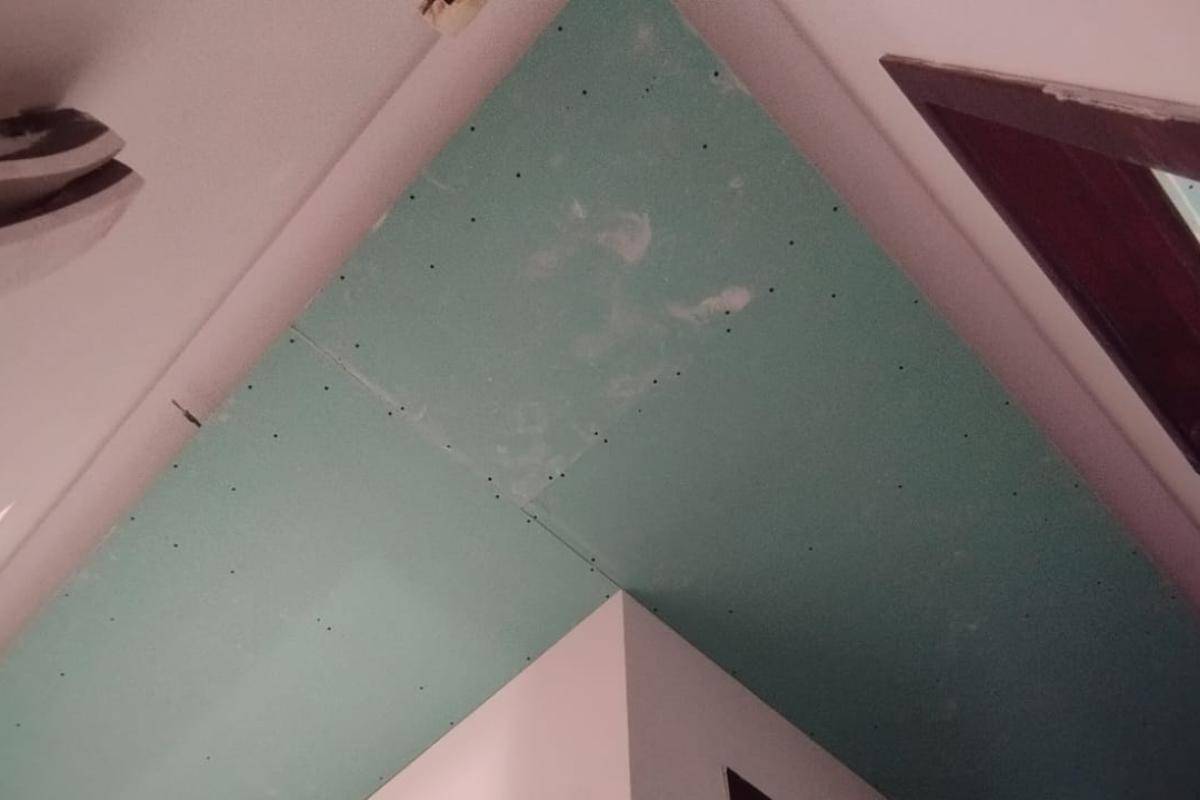
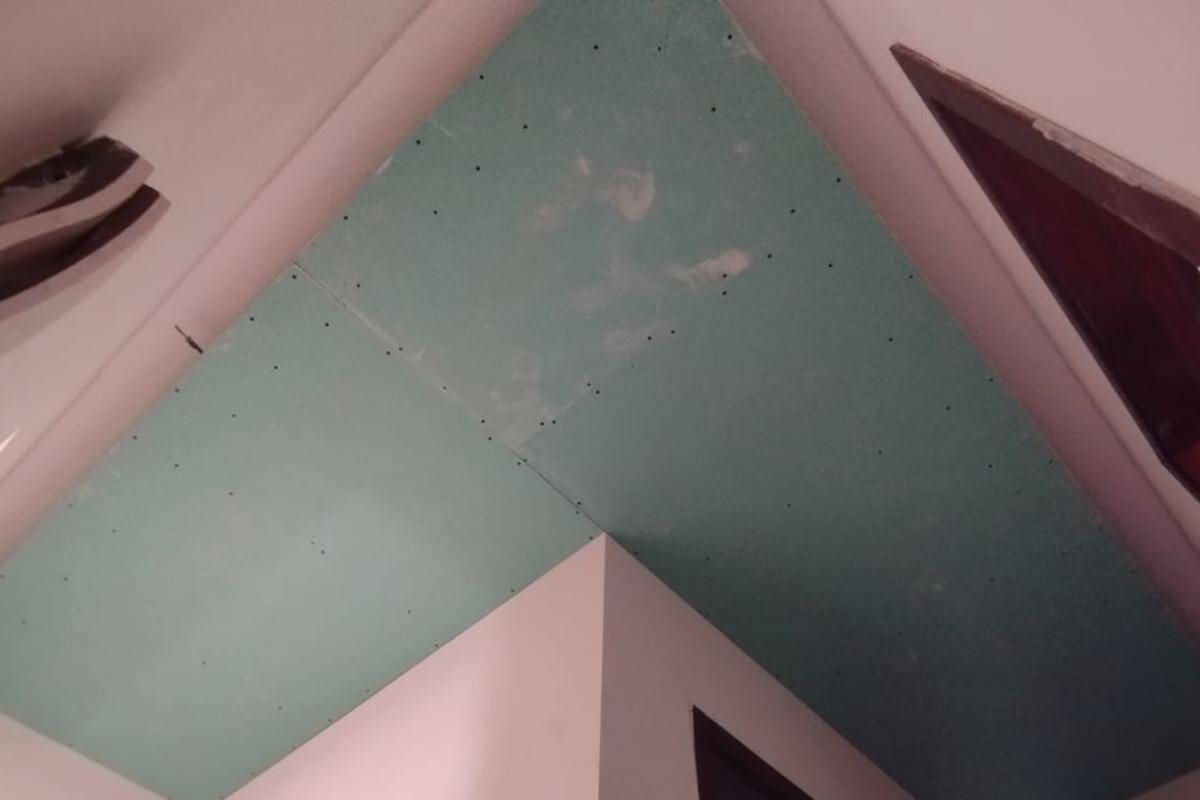
| A diagonal crack from the corner of an opening or bulkhead | A board joint placed on the corner instead of cutting the board into an L |
| Several cracks in one area, with sagging | Hangers too far apart, or a load hung on the gypsum |
| A crack where ceiling meets wall | Different movement between ceiling and wall, with no shadow gap or flexible trim |
| A crack with a yellow stain or swelling | Moisture or a leak from above |
The main causes
A frame that moves
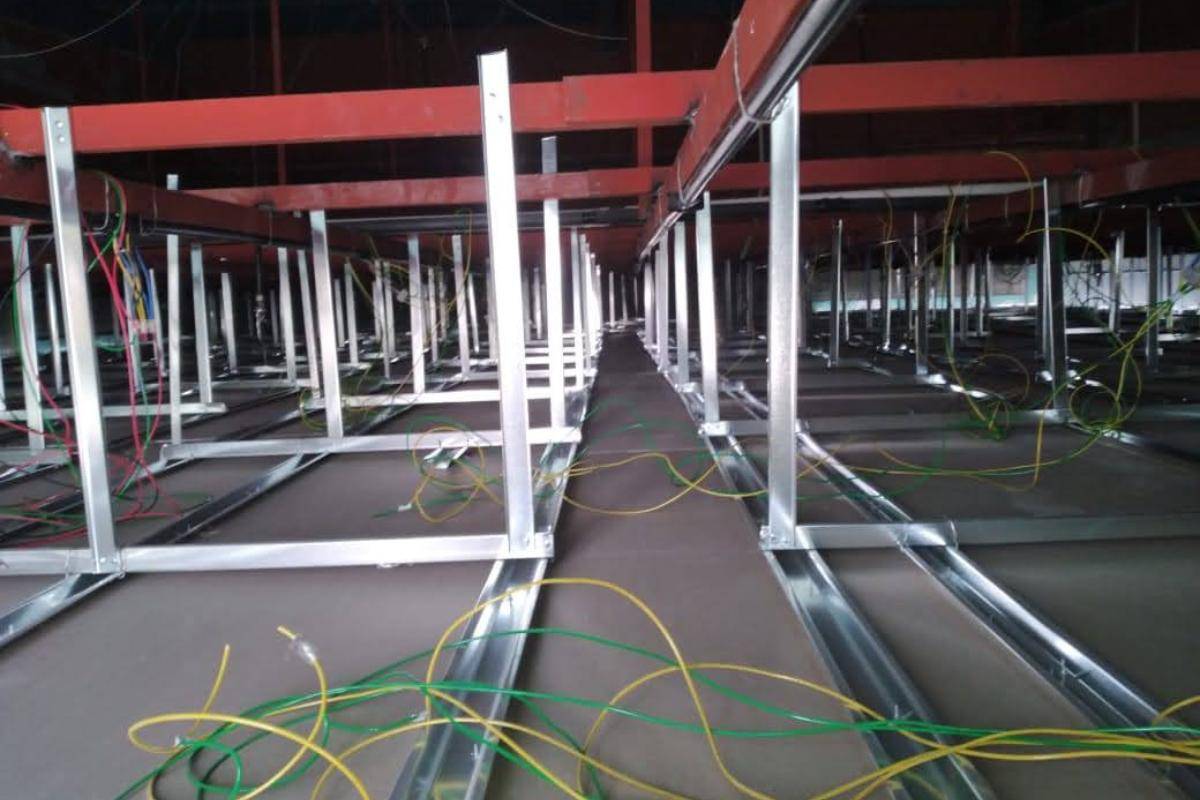
A ceiling that shakes when a door closes, or dips between hangers, keeps breaking its joints. See the suspended ceiling frame for proper spacing.
Joints without tape
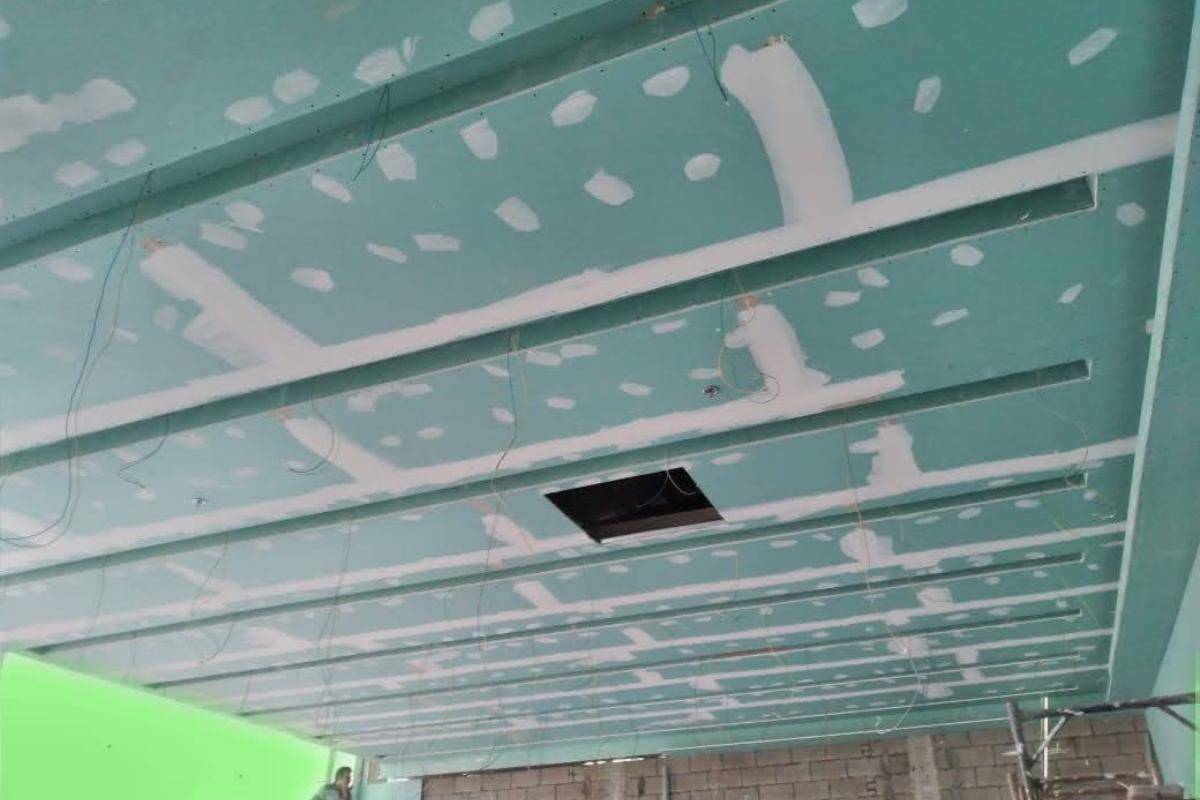
Filler alone does not resist tension. Tape (paper or mesh) bedded in the filler is what ties two boards together. A joint finished in one thick coat shrinks and cracks.
Joints at corners
At a light opening or the edge of a bulkhead, two boards must not meet on the corner line. Cutting the board into an L moves the joint away from where stress concentrates.
Expansion and contraction
Long corridors, large halls and spaces with big temperature swings need movement joints at the intervals the manufacturer sets; otherwise the crack makes its own joint.
Moisture
Standard board near steam, or condensation from an uninsulated duct, weakens the paper and gypsum until it cracks and sags. Read about moisture and condensation in ceilings.
How we prevent it from the start
- Hanger and channel spacing to the system, with independent support for loads.
- The right board for each room, and green board where there is moisture.
- Staggered joints between rows, never on one line, and L-cuts at corners.
- Tape in every joint, and filler in three thin coats with proper drying time.
- Movement joints in large areas, and a shadow gap or trim at the wall.
If a crack appears
Find the cause first; then open the crack, remove weak filler, add screws if the boards move, tape and fill in layers, and repaint the whole area rather than the patch. In our maintenance service we start with the cause before the filler.
Frequently asked questions
Is a ceiling crack dangerous?
A hairline crack on a joint is usually cosmetic, but a crack that widens, or comes with sagging or water stains, needs the frame and the source of moisture checked straight away.
Is fresh filler over the crack enough?
No. Unless the crack is opened, taped and filled in layers, and the cause of movement fixed, it returns in the same place.