The marble alternative guide: types, uses and how it is installed
What you need to know about marble-alternative panels: materials (PVC and SPC), thicknesses and sizes, where they suit and where they do not, and proper installation.
Arkan Almajara team · · 2 min read
The short answer
Marble alternative is polymer sheet with a high-definition printed layer and a gloss or matt face. It gives the look of marble at lower weight, faster fitting and usually lower cost. It suits interior walls, columns, TV walls and entrances, not floors under traffic or direct heat.
- Common sheets are PVC or SPC, roughly 2.5 to 5 mm thick, per manufacturer.
- It goes on a flat, dry surface with a suitable adhesive, sometimes on a frame.
- Its strength is walls and columns, not floors or directly behind a hob.
- Planning vein direction and joints is what makes it look natural.
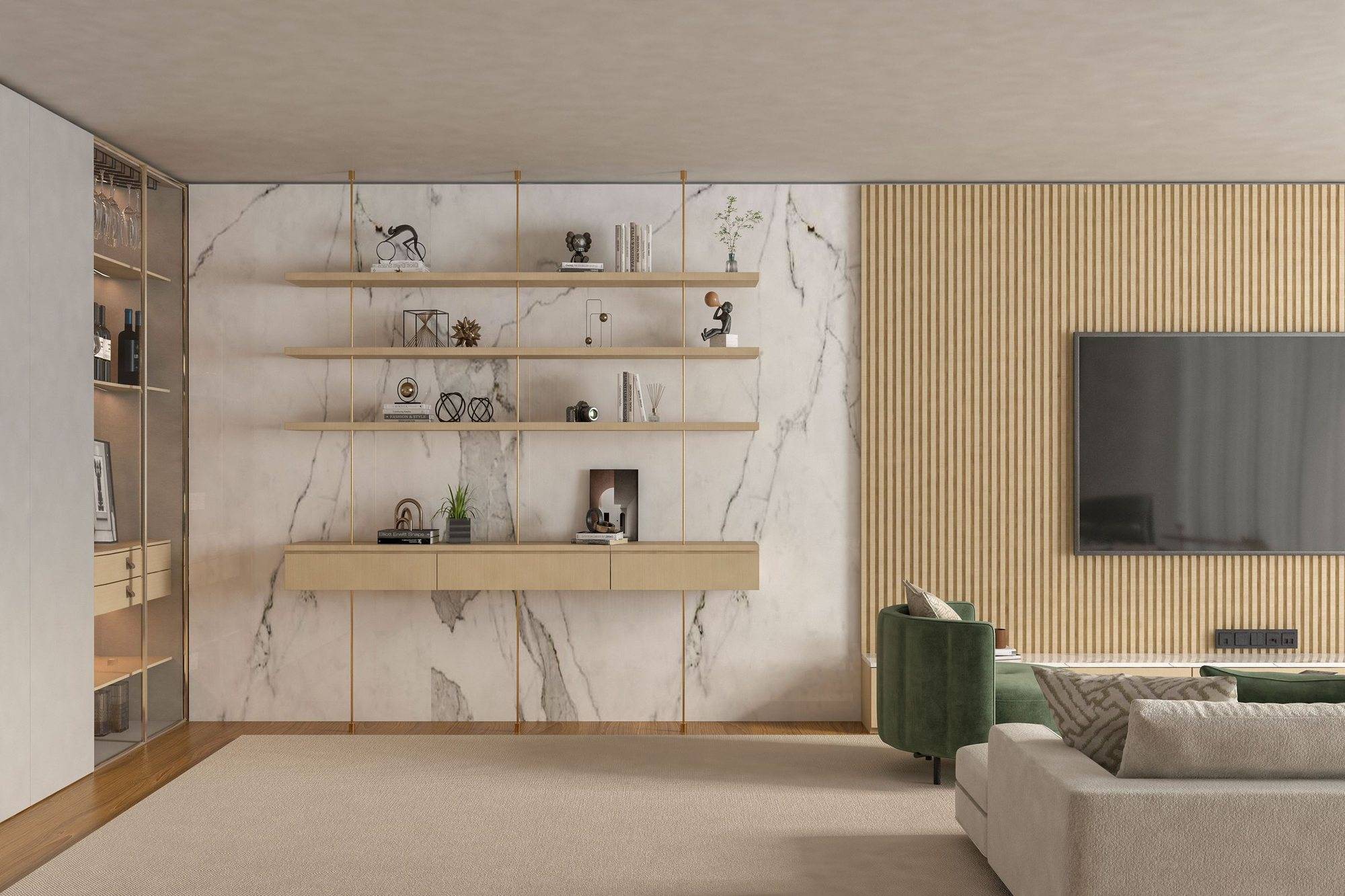
Marble alternative is one of the materials that has changed wall finishing in recent years: a building entrance with one continuous marble slab, a TV wall with golden veins, reception columns with a stone look, without the weight, cost and installation time of stone.
What is it?
Polymer sheet (usually PVC, or the stiffer SPC with its stone powder content), carrying a printed layer made from high-resolution photography of real marble, then a gloss or matt protective layer. A common size is 1220 × 2440 mm; it varies by supplier.
Where it suits
| Location | Note |
|---|---|
| TV walls and living rooms | The best-known use, with a frame or profile |
| Building entrances and receptions | Large sheets and book-matched veins |
| Columns | Wrapped with metal or mitred corners |
| Bathrooms outside the shower | On a dry, flat substrate |
| Shops and showrooms | Speed of installation is a real advantage |
Where it does not
- Floors: its surface does not take constant abrasion.
- Directly behind a hob: high heat can distort it.
- Outdoors in direct sun: unless the supplier offers an exterior grade.
- Damp or uneven substrates: waves show and the adhesive lets go.
Installation
- Substrate: flat, dry and clean. A wavy wall is levelled first or lined with gypsum board.
- Set-out: sheets drawn on the wall, vein direction, joint positions and matching if any. Read book-matching.
- Cutting: with precise tools; edges mitred or capped with a profile.
- Bonding: the supplier’s recommended adhesive over the whole back, or in dots and lines as instructed.
- Joints: a fine, even joint, or a metal profile that becomes part of the design.
- Protection: the protective film stays on until the end of the works.
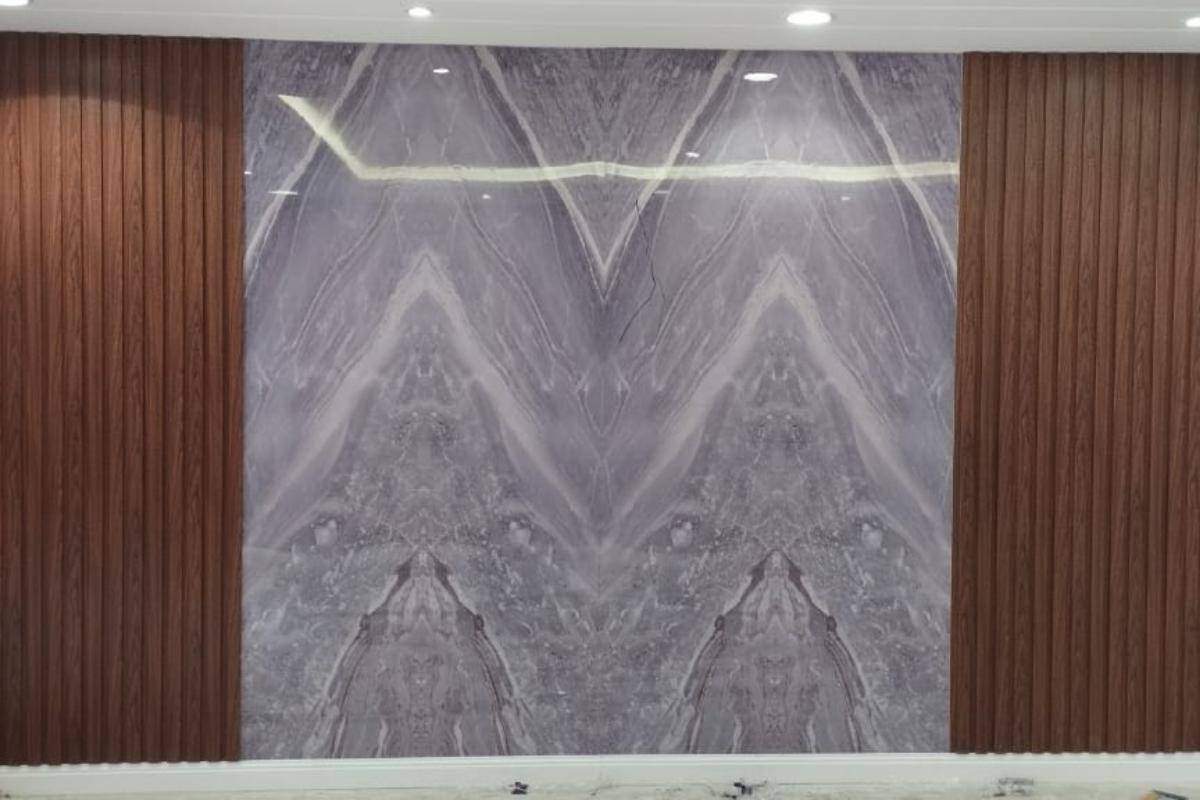
At a building entrance we built, a book-matched marble-alternative panel sits between wood-alternative slats, and light from the ceiling brings out the veins without harsh reflections.
Cost
We do not quote figures because they vary with supplier, type, quantity and detail. Compare sheet type, thickness, protective layer and installation method across quotes, not the price alone. Read marble alternative vs natural marble.
The service: marble alternative.
Frequently asked questions
Does marble alternative look real?
At normal viewing distance, yes, if the print is good, the joints are planned and the veins run on. Up close and under side light it can be told apart, especially at the edges.
Does it cope with humidity?
PVC and SPC do not absorb water, so they are used in bathrooms outside the direct water zone. What matters is a dry substrate, the right adhesive and sealed edges.