TV wall design ideas: frame, lighting and hiding the cables
How to design a complete TV wall: size and distance from seating, materials (gypsum, marble alternative, slats, stone panels), lit shelves, backing and hidden cables.
Arkan Almajara team · · 2 min read
The short answer
A successful TV wall starts from the seating position and screen size, then arranges frame, storage and lighting around it. Its most important parts are invisible: backing inside the wall, cable routes, sockets behind the screen and where the drivers go.
- The middle of the screen sits near eye level when seated.
- Plan backing, cable routes and sockets before the wall is closed.
- One main material and one accent are enough; more tires the eye.
- Soft backlighting is easier on the eyes while watching.
In many homes the TV wall has become the most important wall in the living room: the focal point, the storage, and the soft light in the evening. Good design brings these roles together without clutter.
Start from the seating
- Distance: choose the screen size for the distance to the sofa; manufacturers give guidance for each size.
- Height: the middle of the screen near eye level when seated, not above a fireplace or near the ceiling.
- Axis: the screen on the seating axis, with the wall designed symmetrically around it or in deliberate balance.
Common compositions
| Composition | Materials |
|---|---|
| A gypsum frame with concealed light and a central panel | Gypsum board + marble alternative or stone panel |
| A full slat wall and a floating unit | Wood alternative or MDF |
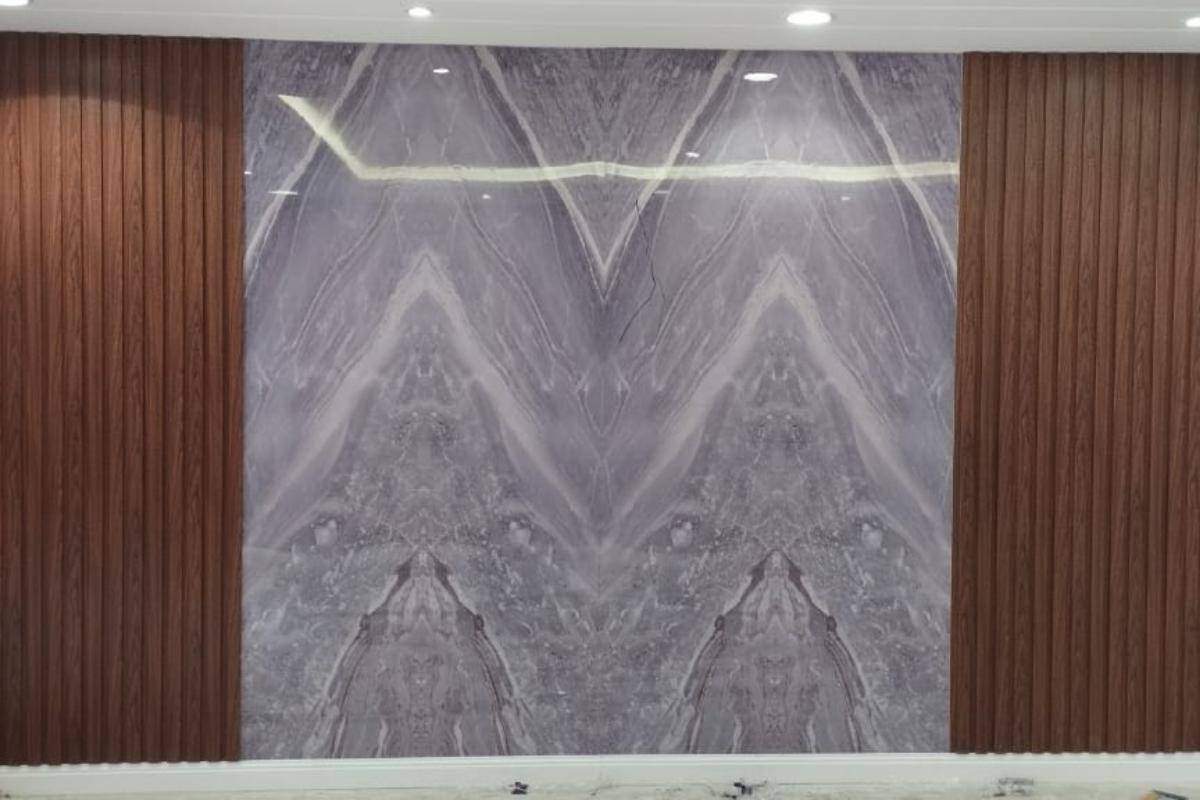
| A book-matched marble panel with a slim frame | Marble alternative + metal profile |
| A lit side bookcase with the screen in the middle | Joinery + shelves + gypsum |
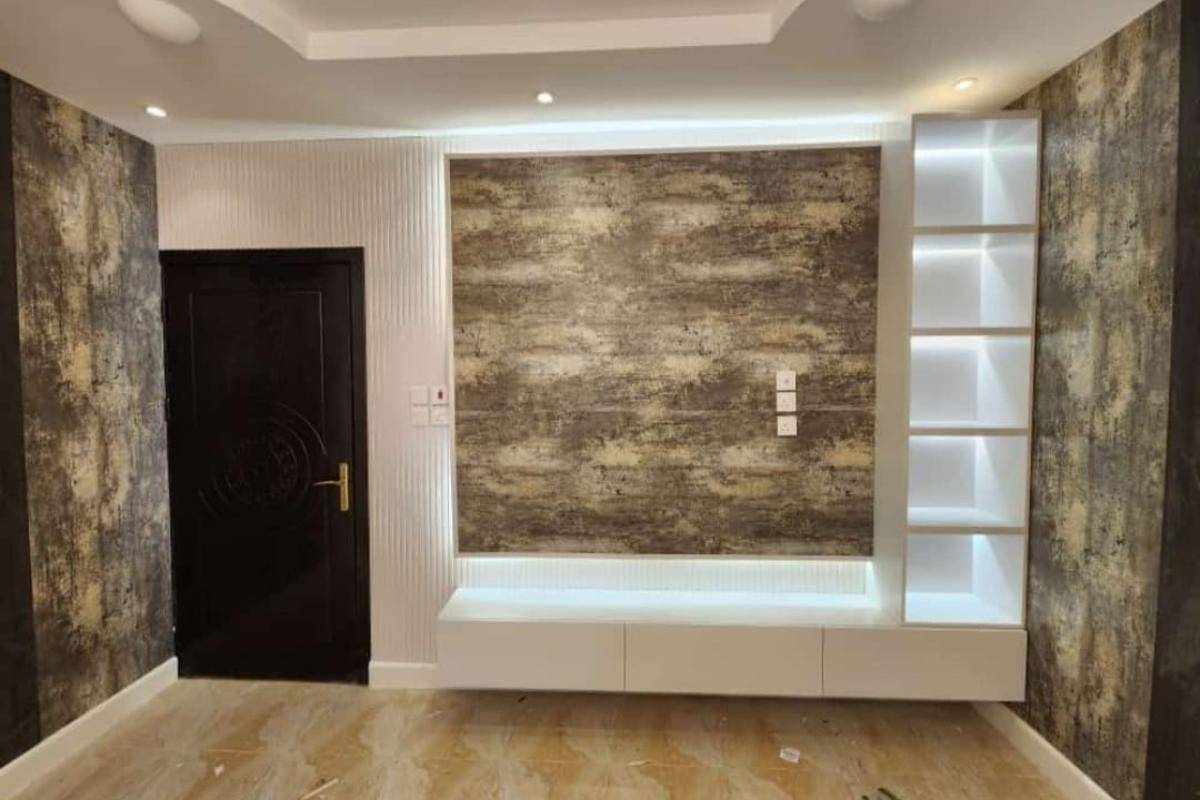
On a TV wall we built: a stone-effect panel behind the screen, a floating unit, lit shelves and fluted panels either side, under a crystal chandelier, all on backing planned inside the wall.
The invisible parts that matter most
- Backing: timber or channels inside the wall where the screen and unit hang. Read hanging heavy items on drywall.
- Cables: a conduit wide enough from behind the screen to the unit, for today’s cables and tomorrow’s.
- Sockets: directly behind the screen and inside the unit.
- Ventilation: for receivers inside the unit.
- Drivers: for shelf and frame lighting, somewhere reachable.
Lighting
Warm backlight (2700–3000 K) reduces contrast between screen and wall and rests the eyes. Read colour temperature and lighting shelves and niches.
Common mistakes
- Too many materials on one wall.
- A screen set too high.
- Cables showing beneath the screen.
- Spotlights reflecting on the screen.
See your wall before it is built with 3D design. The service: TV walls and feature walls.
Frequently asked questions
Wall-mount the TV or stand it on a unit?
Wall-mounting with a floating unit beneath gives a clean line and easy cleaning. It needs backing in the wall and a hidden cable route to the unit.
What lighting suits a TV wall?
Indirect light behind the frame or in the shelves, in a warm tone, and no direct spotlights that reflect on the screen.