Curved gypsum ceilings and walls: how to build them without ripples
Building curves, circles and domes in gypsum board: flexible boards, curved frames, achievable radii, and lighting curves without exposing flaws.
Arkan Almajara team · · 2 min read
The short answer
Curves in gypsum board are built on a pre-formed curved frame with thin or flexible boards bent over it, sometimes with boards dampened. The tighter the radius, the thinner the boards and the more layers needed, and the less forgiving raking light becomes.
- The radius decides the method: a gentle bend with standard board, a tight one with thin flexible boards.
- The curved frame is formed precisely on a template; it is what makes the curve clean.
- Cove lighting on a curved edge needs a flexible strip and an even recess.
- Curves take more time and labour, so use them where they serve the design.
A curved line softens a space: a rounded reception desk, a circular island over a table, a ceiling edge that wraps around a column. But it is the hardest thing in gypsum board, because the eye picks up any break in the curve.
Three ways to bend
| Radius | Method |
|---|---|
| Large (gentle bend) | Standard 12.5 mm board bent over a frame at closer spacing |
| Medium | 6 or 9.5 mm boards, sometimes two layers, or a flexible board made for curves |
| Small (circles and columns) | Very thin flexible boards, or boards dampened and shaped on a template per the manufacturer’s instructions |
The frame is the curve
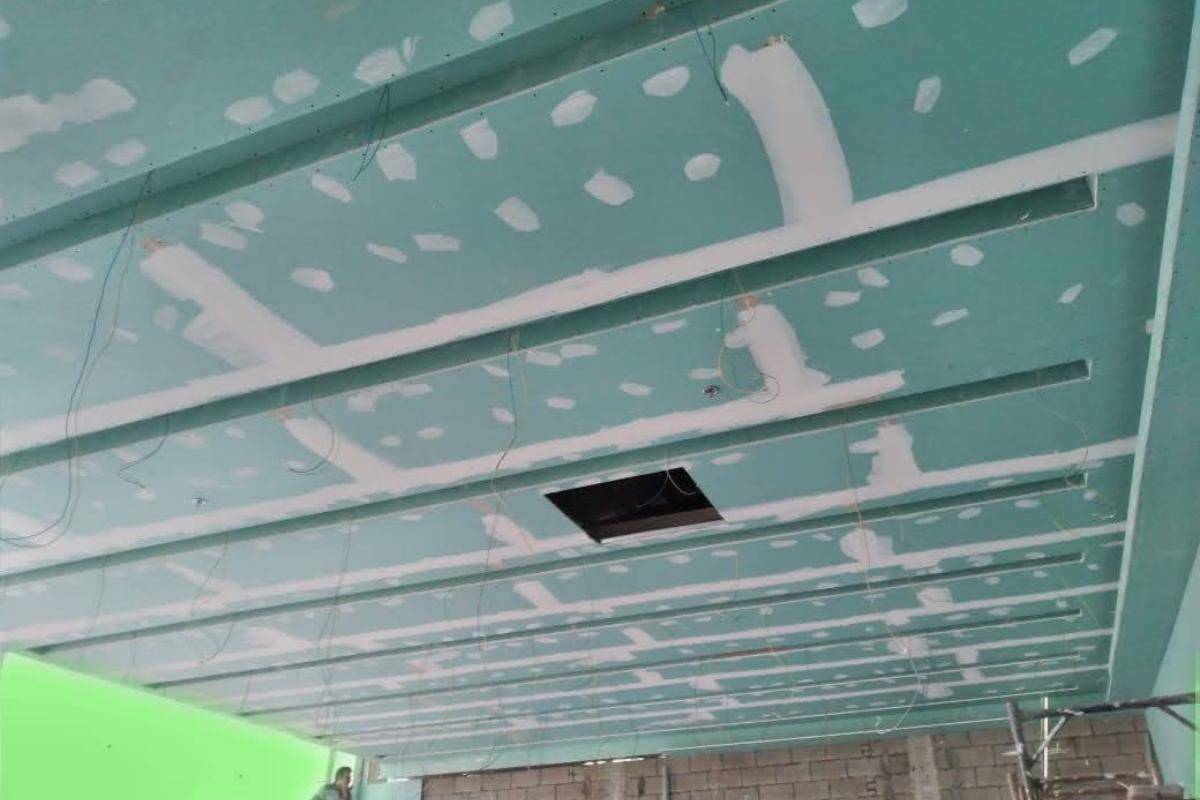
Before any board, the curve is drawn full-size on the floor and the frame is formed on it: factory-curved channels, or channels notched and bent evenly, with studs closer than usual. If the frame wavers, no amount of filler will save it.
Lighting curves
- The strip must be flexible and suited to bending, with a high LED density so no spots show.
- The recess must keep a constant depth along the curve, or the light intensity will change.
- Side light reveals ripples, so we raise the jointing finish level here.
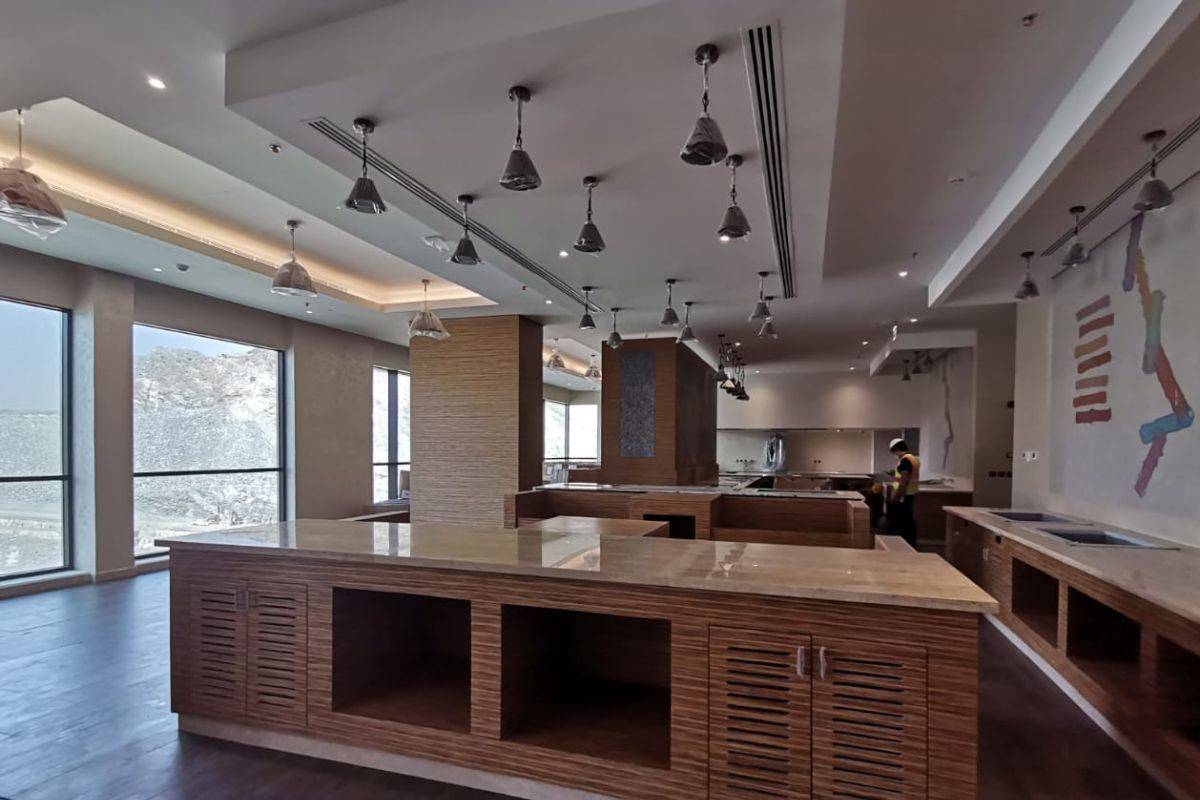
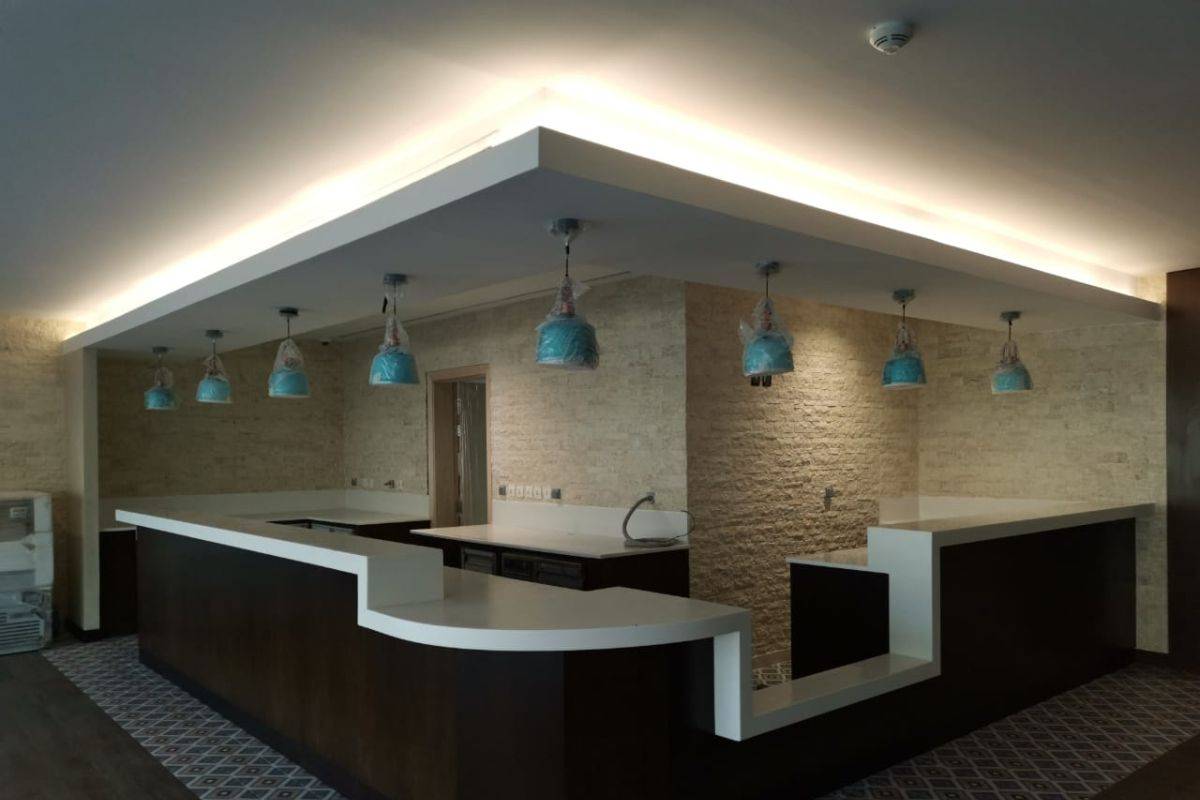
On a hospitality project we built, a curved reception counter sat under a floating ceiling with concealed light, and the precision of the curved frame is what kept the line of light continuous.
Design tips
- One clear curve is stronger than several small ones.
- Tie the curve to something in the room: a table, a counter, the axis of the entrance.
- Mind the furniture below: a circle in the ceiling over a rectangular table looks wrong.
See the curve before it is built with 3D design, and build it with our gypsum board service. Read also designing ceiling levels.
Frequently asked questions
Can a full circle be made in the ceiling?
Yes, as a raised or lowered circular island with cove light around it. It is one of the most requested shapes over dining tables and in receptions.
Why do flat facets show in a curve after building?
Because the frame was made of straight pieces too far apart, or the board was too thick to bend smoothly. The answer is closer studs and thinner boards.