Cornice or shadow gap? How to finish where ceiling meets wall
Gypsum cornices, shadow gaps and a plain corner compared for finishing the ceiling-to-wall junction: looks, crack prevention, lighting, and what suits each style.
Arkan Almajara team · · 2 min read
The short answer
The ceiling-to-wall junction is where gypsum cracks most, because the two move differently. A shadow gap gives a clean modern line and hides movement; a cornice suits classical styles and covers the joint; a plain corner is cheapest but most prone to cracking.
- A shadow gap is a modern, functional solution: a line of shadow separating ceiling from wall.
- A cornice covers the joint and suits classical or neoclassical styles.
- A corner finished with filler alone usually cracks over time.
- A shadow gap needs straight walls and very precise work.
Ceiling and wall are different materials on different supports that expand and contract differently. The line where they meet is where a crack shows first, so it deserves a design decision, not just filler.
Three options
| Solution | Look | Cracking | Suits |
|---|---|---|---|
| Plain corner with filler | A sharp line | Most prone | Tight budgets, with flexible tape |
| Shadow gap | A fine shadow line separating the ceiling | Hides movement | Modern design, offices and hotels |
| Gypsum cornice | A decorative frame | Covers the joint | Classical styles and traditional majlis |
Shadow gap
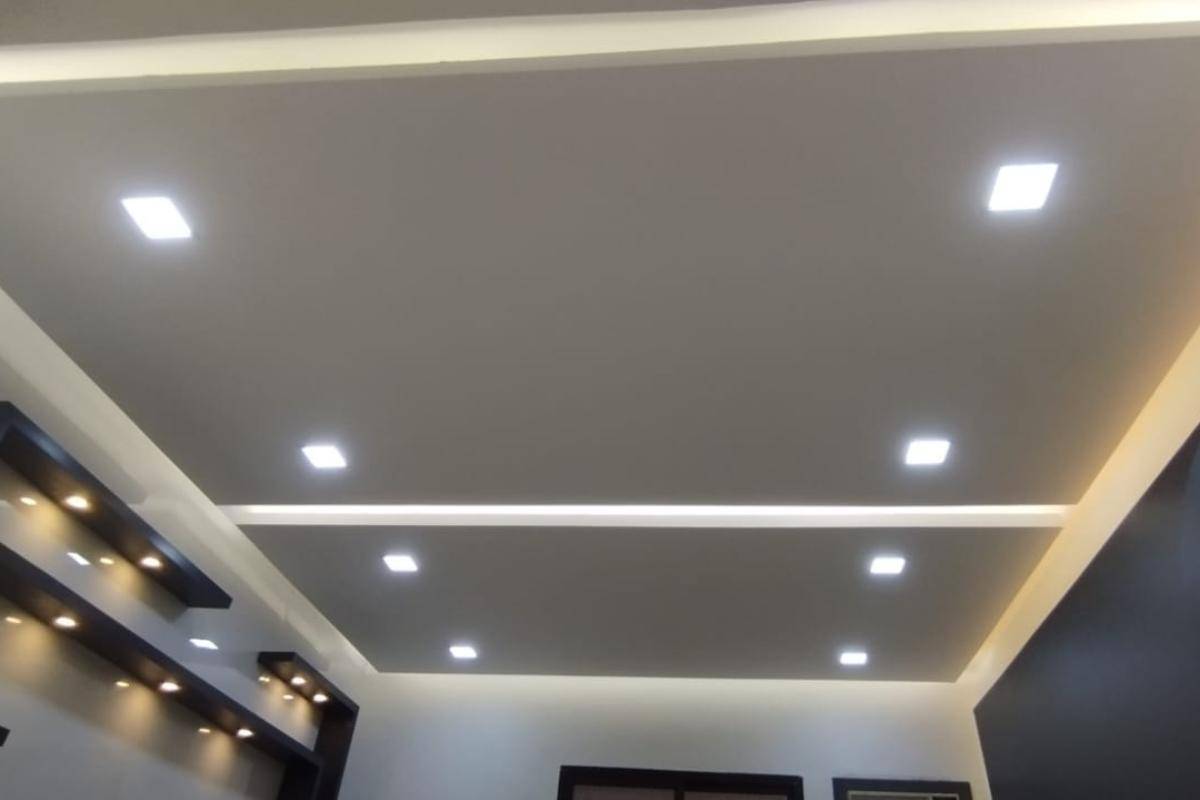
Built with a special steel trim at the edge that leaves a narrow recess between ceiling edge and wall. The ceiling seems to float, and any difference in movement disappears into the shadow.
It needs: straight walls, because the gap exposes any waviness; an accurate level; and a clean board edge.
Cornice
Cast or run gypsum sections fixed into the corner. They hide the joint and add shadow and detail. Size them to the room’s height: a heavy cornice weighs down a low room.
Plain corner
The cheapest and most common. To reduce cracking: folded paper tape, a flexible paintable sealant or a flexible trim, and no rigid tie between ceiling and wall in large areas.
Lighting
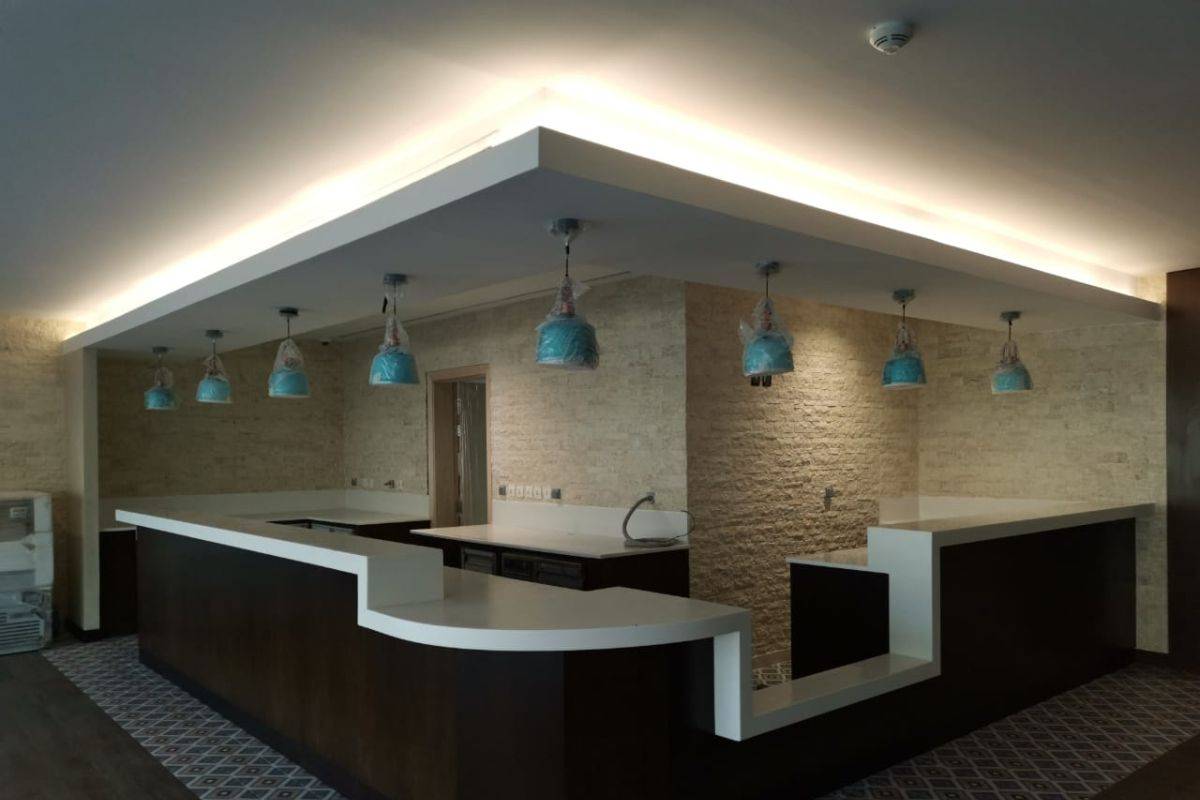
A wider shadow gap can hold a light strip that rings the ceiling, and a classical cornice can be designed with a hidden light recess above it. Either way, size it with the lighting design.
Read about why ceilings crack and jointing, and see our gypsum board service.
Frequently asked questions
Does dust collect in a shadow gap?
A little, and a vacuum brush clears it. A gap of moderate width and depth needs no special care.
Can lighting go into a shadow gap?
Yes, with a wider custom detail it becomes a line of light around the ceiling. The recess and drivers must be planned in advance.