The cove lighting guide: designing and building concealed light in ceilings and walls
How concealed lighting in gypsum ceilings and walls is designed and built: cove dimensions, strip type, density, colour temperature, drivers, and avoiding hotspots and shadows.
Arkan Almajara team · · 2 min read
The short answer
Cove lighting depends on a cove sized to hide the strip while letting light spread across ceiling or wall, a high-density strip, the right colour temperature, and drivers with headroom and feed points that prevent dimming. Most problems (spots, shadows, a dim far end) come from decisions made before building.
- The cove must hide the strip from a seated eye and leave an opening wide enough for light to spread.
- Choose a high-density or COB strip to avoid dots showing on the surface.
- Warm (2700–3000 K) for homes and restaurants; neutral for offices.
- Feed long runs from more than one point, and put drivers somewhere reachable.
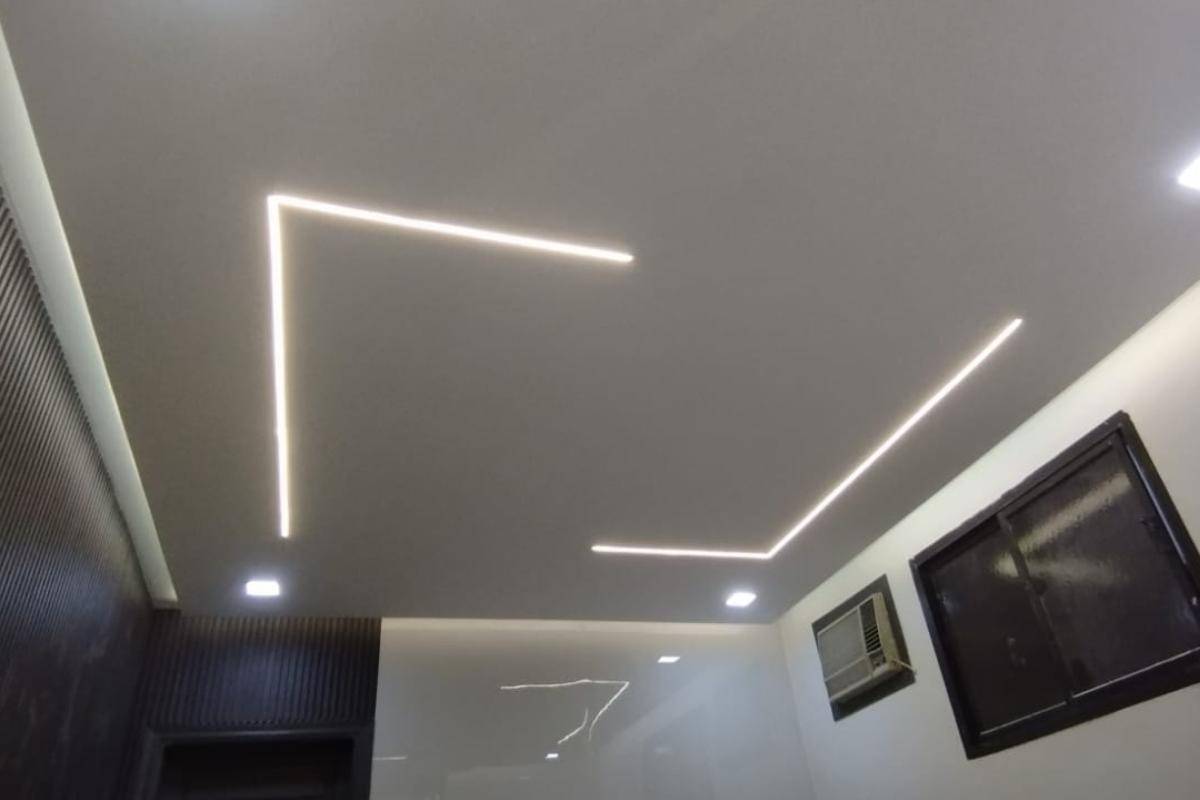
Cove lighting is one of the things owners ask for most in gypsum ceilings, and one of the things we most often see done wrong: visible dots of light, harsh shadows, a dim far end, and a driver nobody can reach.
The cove
| Dimension | Why it matters |
|---|---|
| Lip height | Hides the strip from someone seated in the room |
| Cove depth | Lets the strip sit back from the lip so light spreads |
| Opening | Sets how much light comes out and how far it spreads across the ceiling |
| Distance to the ceiling | The greater it is, the further and softer the light spreads |
We size the cove with the ceiling design, not after it. Read designing ceiling levels.
The strip
- LED density: higher gives a smoother line. COB strips give a continuous line with no dots.
- Power (W/m): sets the intensity. More is not always better at home.
- CRI: 90 or above where colours matter.
- Voltage: 24 V allows longer runs before dimming than 12 V.
Colour temperature
2700–3000 K for homes, restaurants and majlis rooms; 3500–4000 K for offices and shops. Read the colour temperature guide.
Drivers and feeds
- A driver rated about 20% above the load.
- Feeds at both ends, or in sections, for long runs.
- Drivers somewhere ventilated and reachable through an access panel.
Work out length, load and drivers with the lighting calculator, and read LED drivers.
Common mistakes
- A cove without enough depth, so the strip shows.
- Glossy paint inside the cove that mirrors the dots. Read painting gypsum ceilings.
- Corners without proper connectors, leaving dark gaps.
- Mixed colour temperatures in one room.
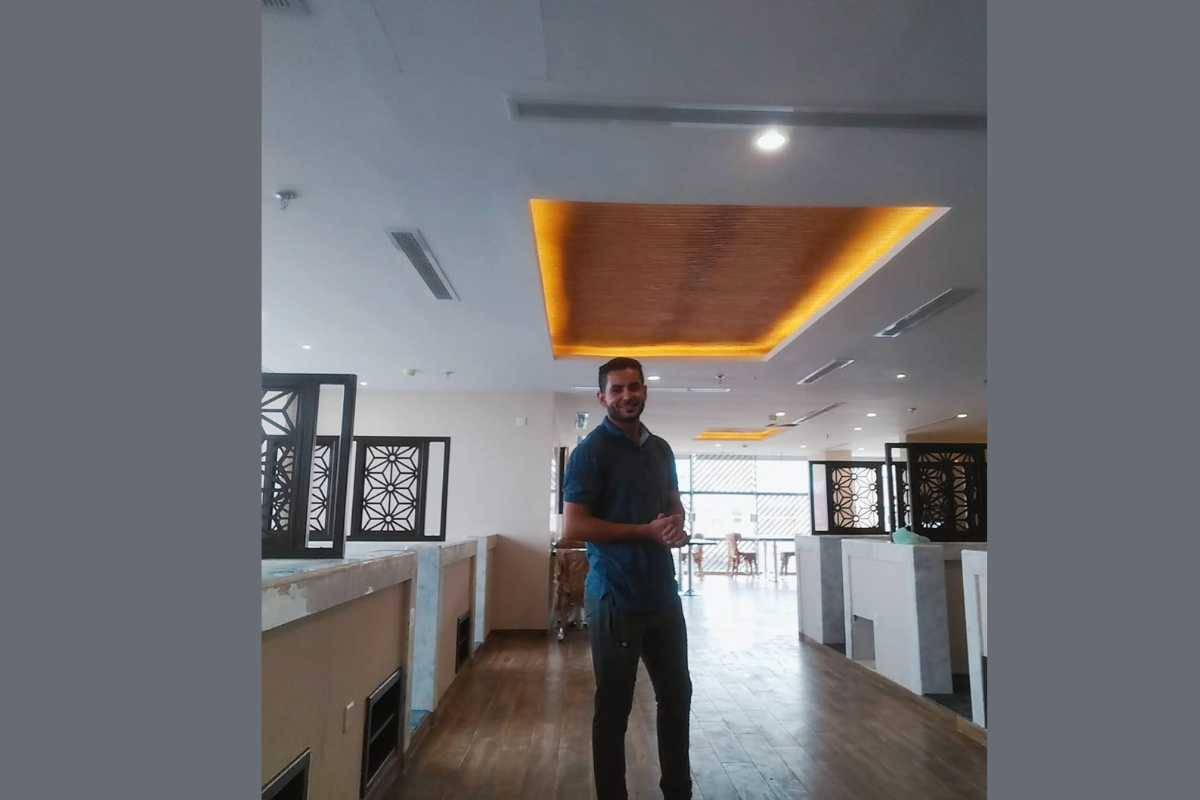
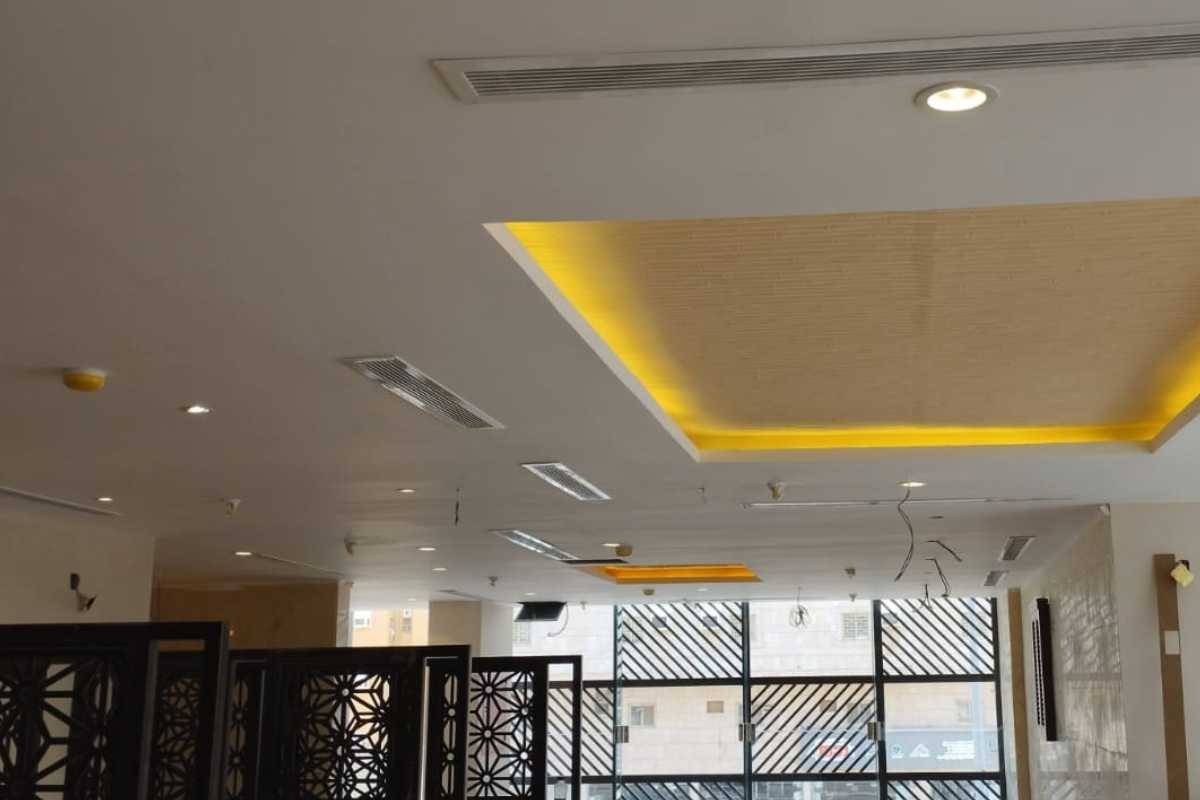
In a restaurant dining hall we built, a recessed ceiling with amber cove light sits over carved timber screens, and the depth of the cove and its light paint are what let the light wash the ceiling without a single visible dot.
The service: concealed and linear lighting.
Frequently asked questions
Why does the light show as dots on the ceiling?
The strip is too close to the surface, its LED density is low, or it has no diffuser. The answer is a denser or COB strip, more distance, or a profile with a diffuser.
Can cove lighting be dimmed?
Yes, with dimmable drivers and a compatible control system. Decide this before buying the drivers.