Spacing downlights in the ceiling: distances, beam angles and avoiding glare
How to lay out downlights in a ceiling: spacing between them and from walls, beam angle, output, preventing glare and shadows, and the mistakes of a uniform grid.
Arkan Almajara team · · 2 min read
The short answer
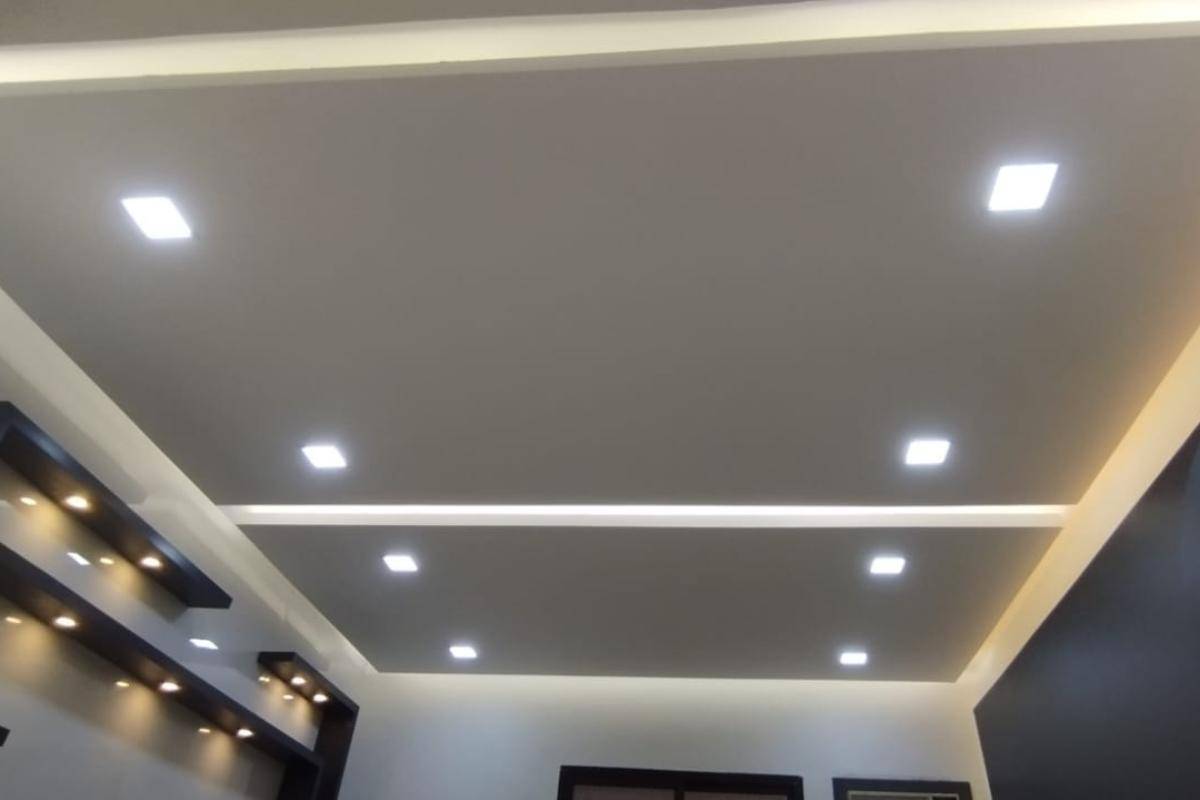
Downlight spacing depends on ceiling height, beam angle and what you want to light. In practice, downlights close to a wall wash it with light, ones over activities serve them, and a random grid that riddles the ceiling with holes is best avoided. Deep-recessed, anti-glare fittings are easier on the eye.
- Beam angle and ceiling height set the size of the pool of light on the floor.
- Downlights near the wall (about 40–60 cm) wash it and make the room feel larger.
- Choose deep-recessed or anti-glare fittings over seating.
- Fewer, well-placed lights beat a dense random grid.
More downlights do not mean better light. A ceiling pierced with thirty downlights on a regular grid can be less comfortable than one with ten in calculated positions.
What sets the spacing
| Factor | Effect |
|---|---|
| Ceiling height | The higher it is, the wider the pool of light on the floor |
| Beam angle | Narrow concentrates; wide spreads |
| Output | Sets the intensity in the pool |
| Purpose | General light, a wall, or a work surface |
A rough rule: the pool’s diameter on the floor grows with height and beam angle, and general-lighting downlights are spaced so their pools overlap slightly without dark gaps. The exact calculation is done with the lighting design.
From the wall
Downlights about 40–60 cm from a wall wash it from above, bringing out texture and making the room feel larger. Further away leaves the top of the wall dark; closer creates harsh scallops.
Glare
- Deep recess: the light source inside the fitting cannot be seen from a seated position.
- Anti-glare (low UGR): important in offices.
- No downlight directly over a pillow or a reclining spot.
- Adjustable fittings: to pick out a painting without lighting the viewer’s eyes.
Mistakes of the uniform grid
- More downlights in the corridor than in the living room.
- A downlight directly above a seated head, casting hard shadows on the face.
- Downlights clashing with the ceiling’s lines or levels.
- Mixed colour temperatures.
The order
Draw the furniture, place downlights to serve activities and walls, then check the ambient light is balanced. Read planning lighting with the ceiling and colour temperature.
The service: lighting.
Frequently asked questions
Are downlights alone enough to light a living room?
They can be, but combining them with cove light or lamps gives softer light and fewer hard shadows on faces.
What beam angle is right?
Narrow beams to pick out a painting or wall, medium for general light, wide for low ceilings. Choose by height and purpose.