The WPC wood alternative guide: types, interior and exterior uses
What WPC wood alternative is, interior versus exterior grades, slats, fluted panels and cladding, its advantages over natural timber, and how it is installed.
Arkan Almajara team · · 2 min read
The short answer
WPC is a composite of wood fibre and polymer with the look and feel of timber, but it does not swell with moisture, attract termites or need painting. Interior grades are used as slats and fluted panels on walls and ceilings; UV-treated exterior grades go on facades and fences.
- Interior and exterior are different products: never use interior grade in the sun.
- It is usually fixed to a frame or battens with hidden clips, not just glued.
- It needs expansion gaps at the ends, especially outdoors.
- No painting needed; it cleans with soap and water.
Natural timber is beautiful and warm, but in a hot, humid climate it needs constant care: it swells, splits, needs regular coating and attracts termites. WPC wood alternative keeps the look of timber and drops most of the trouble.
What is it made of?
Wood fibre or flour mixed with a polymer (usually PVC or PE) and additives, extruded into profiles. Modern capped (co-extruded) products have an outer shell that protects against scratches, stains and UV.
Common forms
| Form | Use |
|---|---|
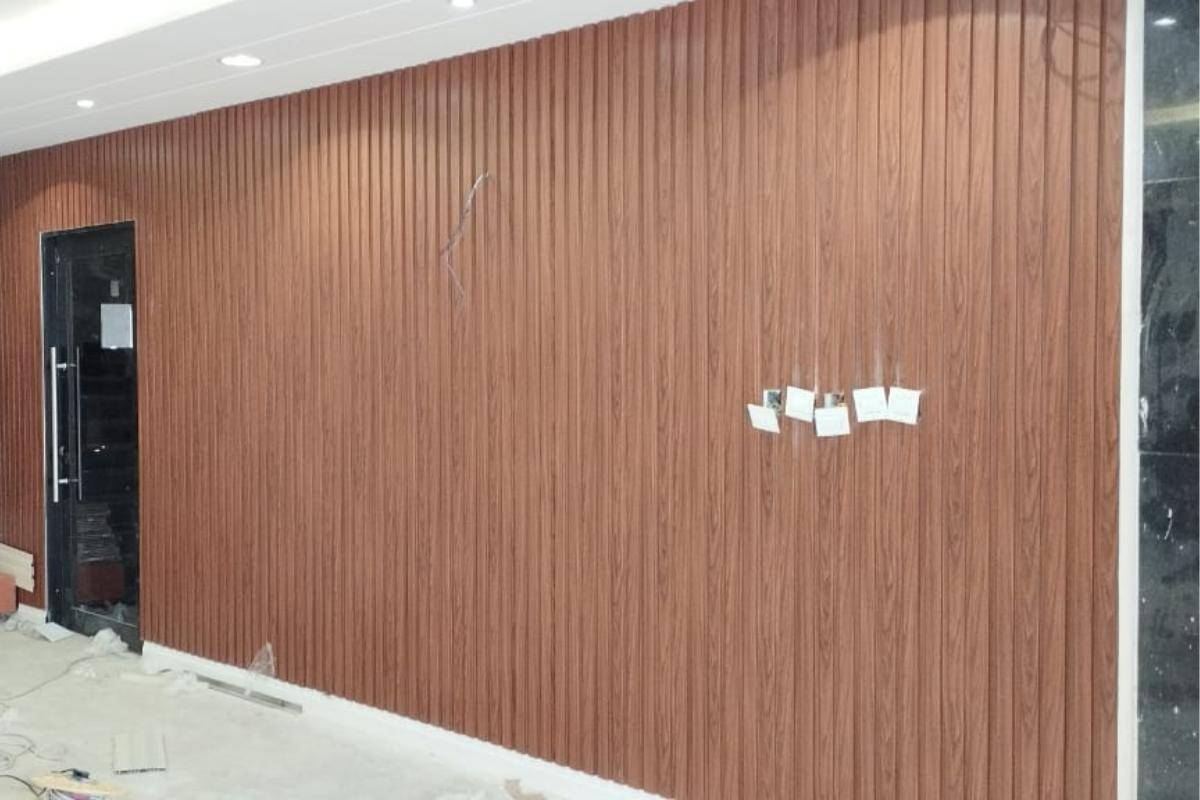
| Slats | Feature walls, behind the TV, timber ceilings |
| Fluted panels | Full walls, columns, counters |
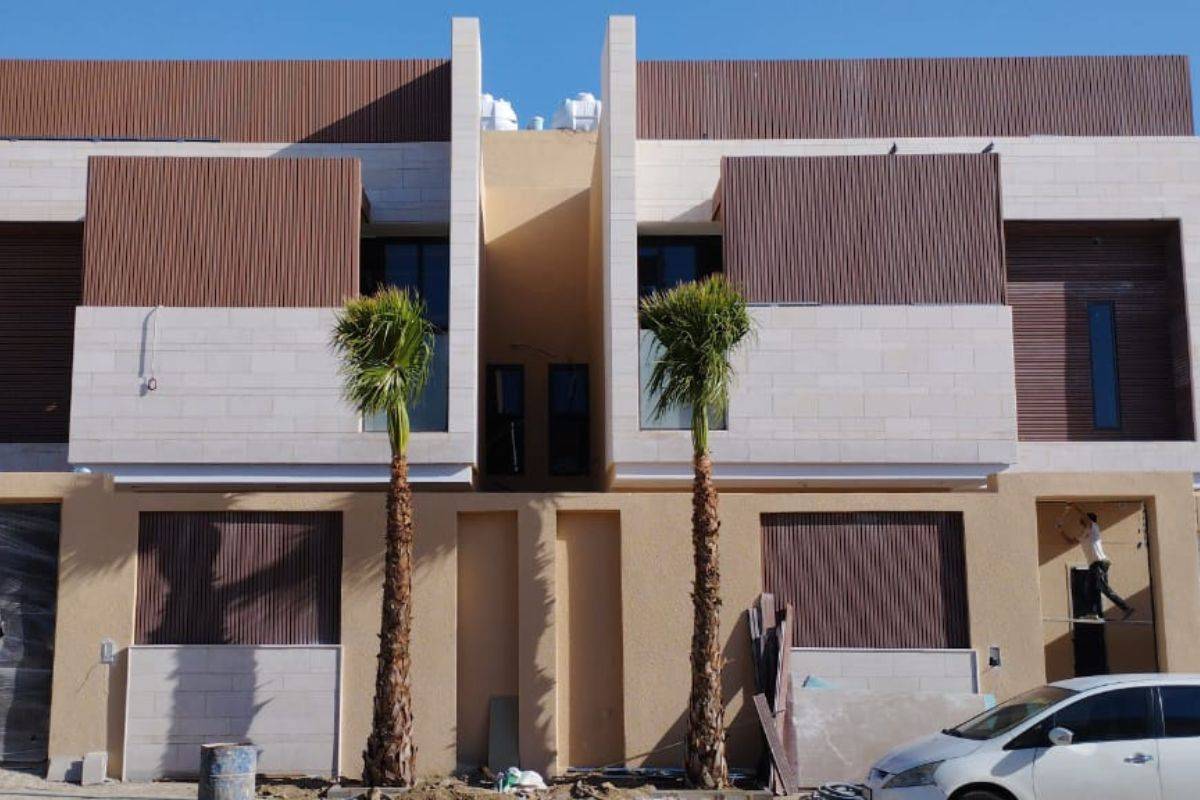
| Exterior cladding | Villa and building facades |
| Decking | Gardens and around pools |
| Light structural profiles | Fences, pergolas, screens |
Interior and exterior
Interior panels do not take direct sun and high heat; they fade and distort. Exterior grades are UV-treated and designed for greater movement. Read cladding facades in wood alternative.
Installation
- Frame: aluminium, WPC or galvanised steel battens fixed to the wall at the manufacturer’s spacing.
- Clips: hold the slats with no visible screws.
- Expansion: gaps at ends and joints, larger outdoors.
- Trims: end and corner pieces close the edges.
- Ventilation: outdoors, a cavity behind the cladding lets air move.
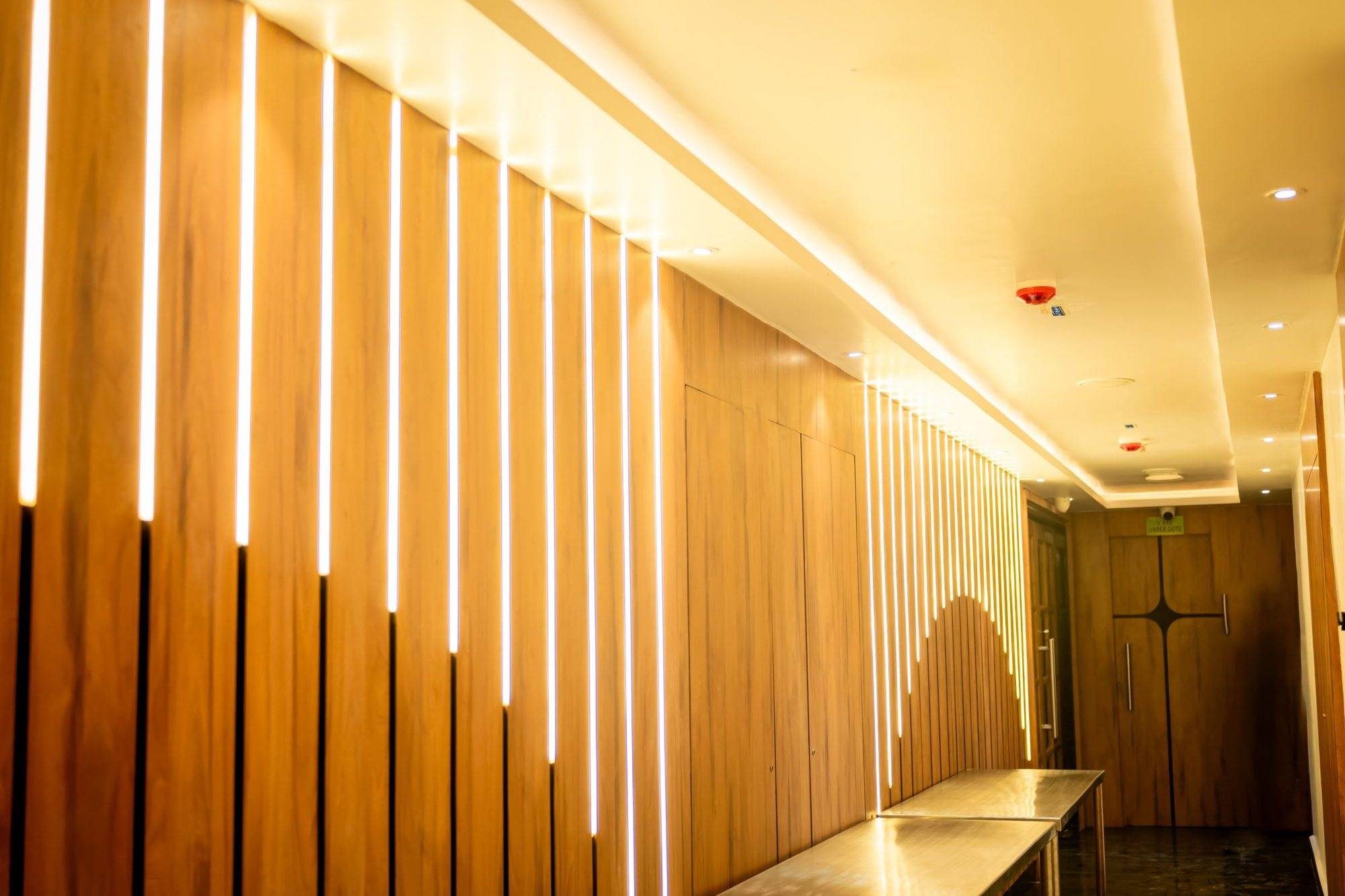
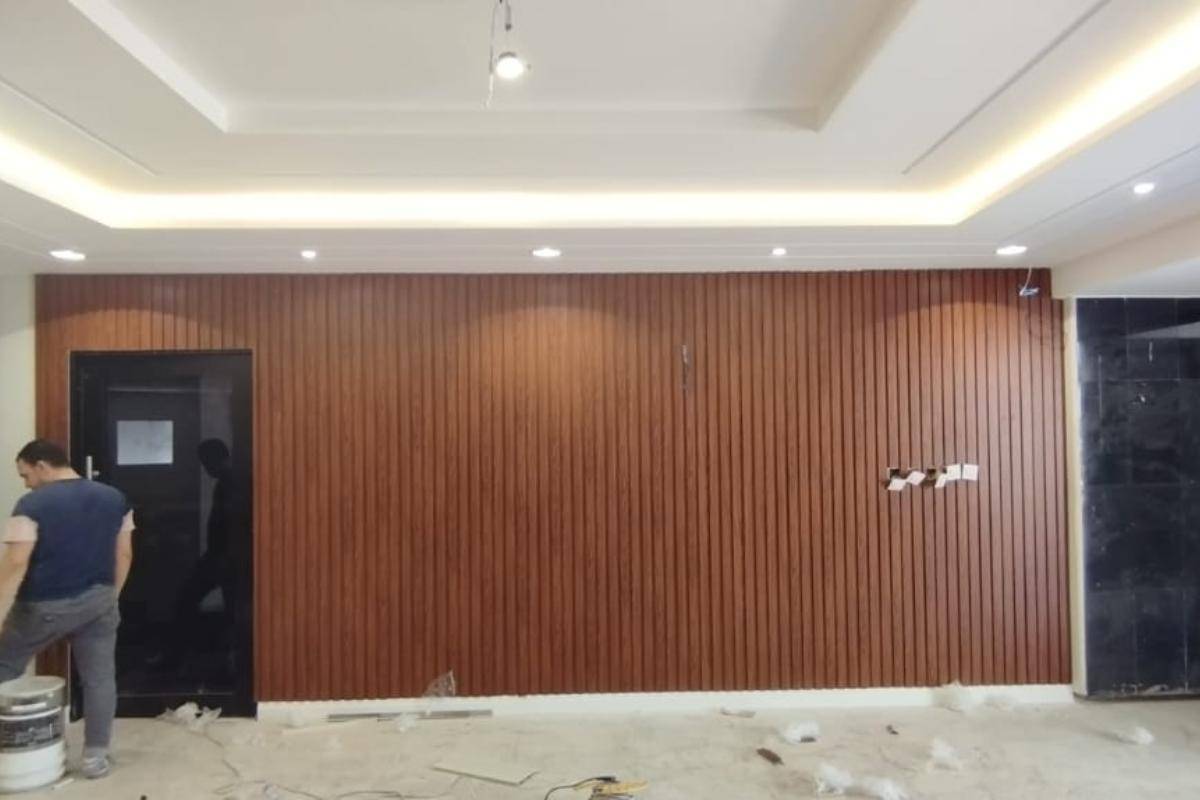
At a building entrance we built, wood-alternative slats went in under a lit ceiling, and keeping them true over the full height is what made the rhythm even.
Care
Water and a mild soap, no strong solvents. No paint or varnish needed. Read caring for wood-alternative cladding.
Estimate the slats for your wall with the slat calculator. The service: wood alternative.
Frequently asked questions
Does wood alternative change colour in the sun?
Treated exterior grades resist fading, but most materials shift a little over years of strong sun. Choose one colour from one batch for the whole facade.
Can it be cut and shaped on site?
Yes, with ordinary woodworking tools, keeping expansion gaps and capping cut ends with trims.