Drywall partitions or blockwork? A comparison for offices, clinics and homes
Gypsum board partitions and internal block walls compared: speed, weight, sound insulation, services, hanging loads and flexibility to change later.
Arkan Almajara team · · 2 min read
The short answer
A drywall partition is lighter, faster and cleaner, insulates sound very well with rock wool and two layers, and is easy to change. Blockwork is tougher against impact and water and takes loads without planning. For offices, clinics and hotels, drywall is the usual choice.
- Drywall is far lighter on the building and faster to build.
- Acoustic performance comes from the system: two layers, wool, and sealed head and base.
- Heavy loads need reinforcement inside the partition, planned in advance.
- In offices and clinics, ease of change later is a real advantage.
When you divide an office or a clinic, or add a room at home, you choose between building a block wall and installing a drywall partition. Each has its own logic.
The comparison
| Criterion | Drywall partition | Block wall |
|---|---|---|
| Weight | Very light | Heavy; sometimes needs a structural check |
| Speed | Fast, dry | Slower: build, render, dry |
| Cleanliness | Relatively clean | More dust, water and waste |
| Sound insulation | Excellent with the right system | Good; depends on thickness and render |
| Services | In the cavity, easily | Chasing and conduits |
| Impact | Lower; improved with high-impact boards | Higher |
| Direct water | Not suitable | Copes better |
| Later changes | Easy | Demolition |
How a partition is built
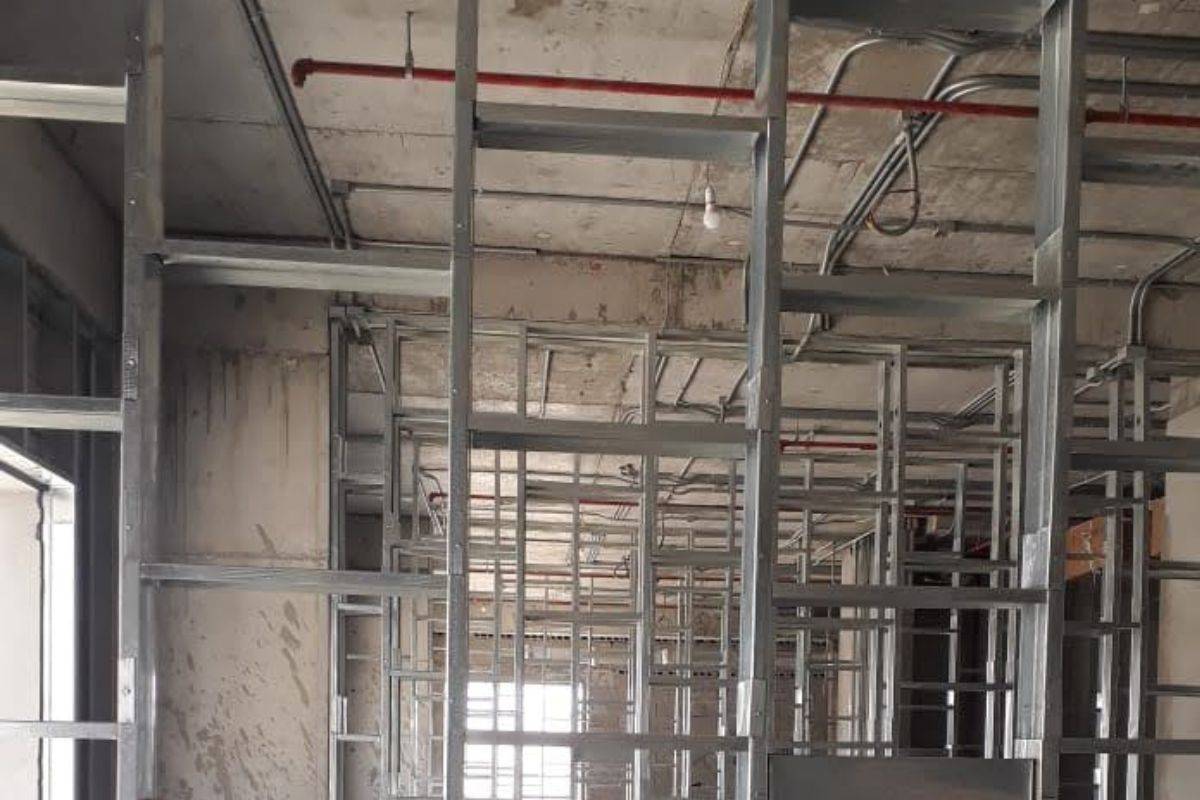
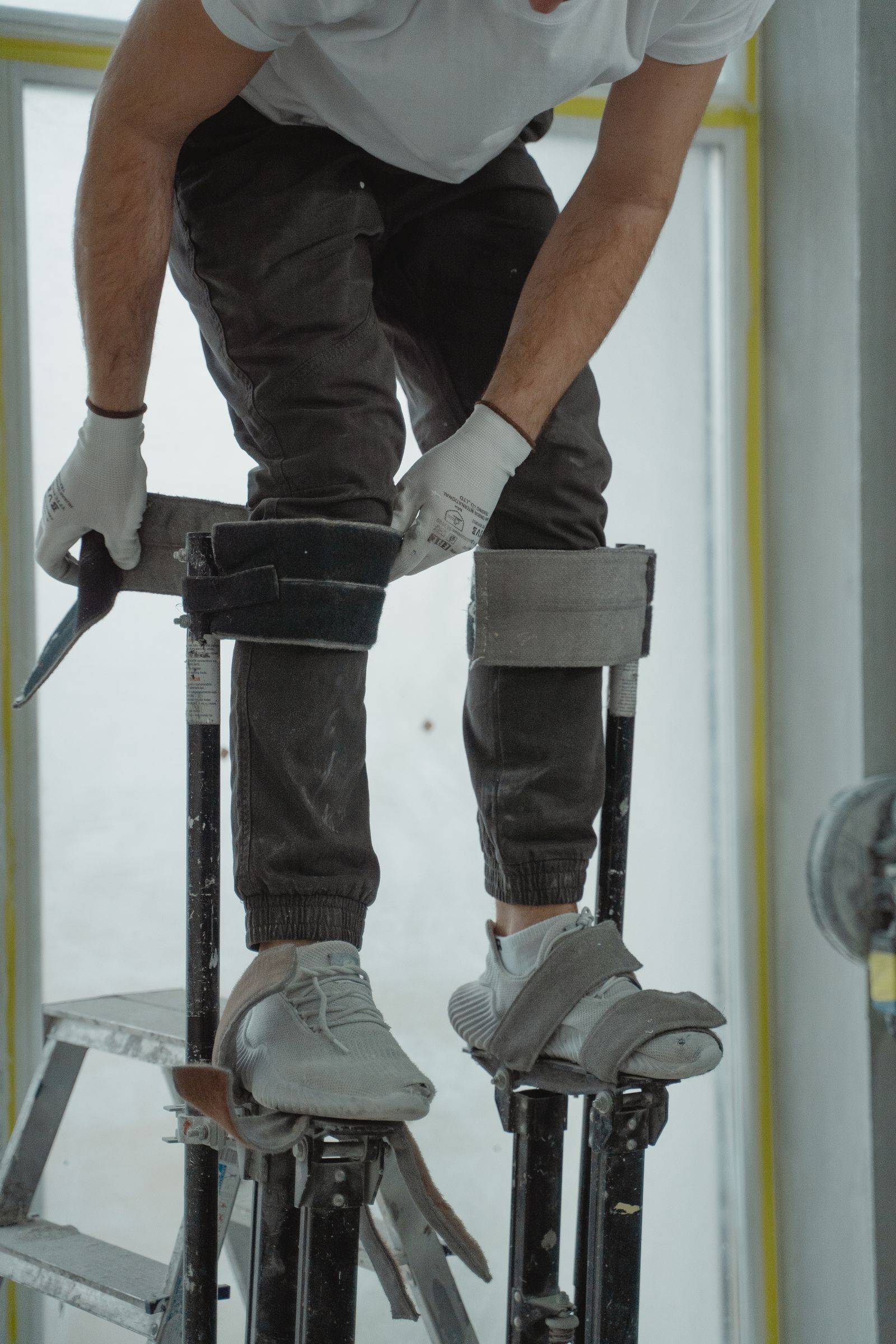
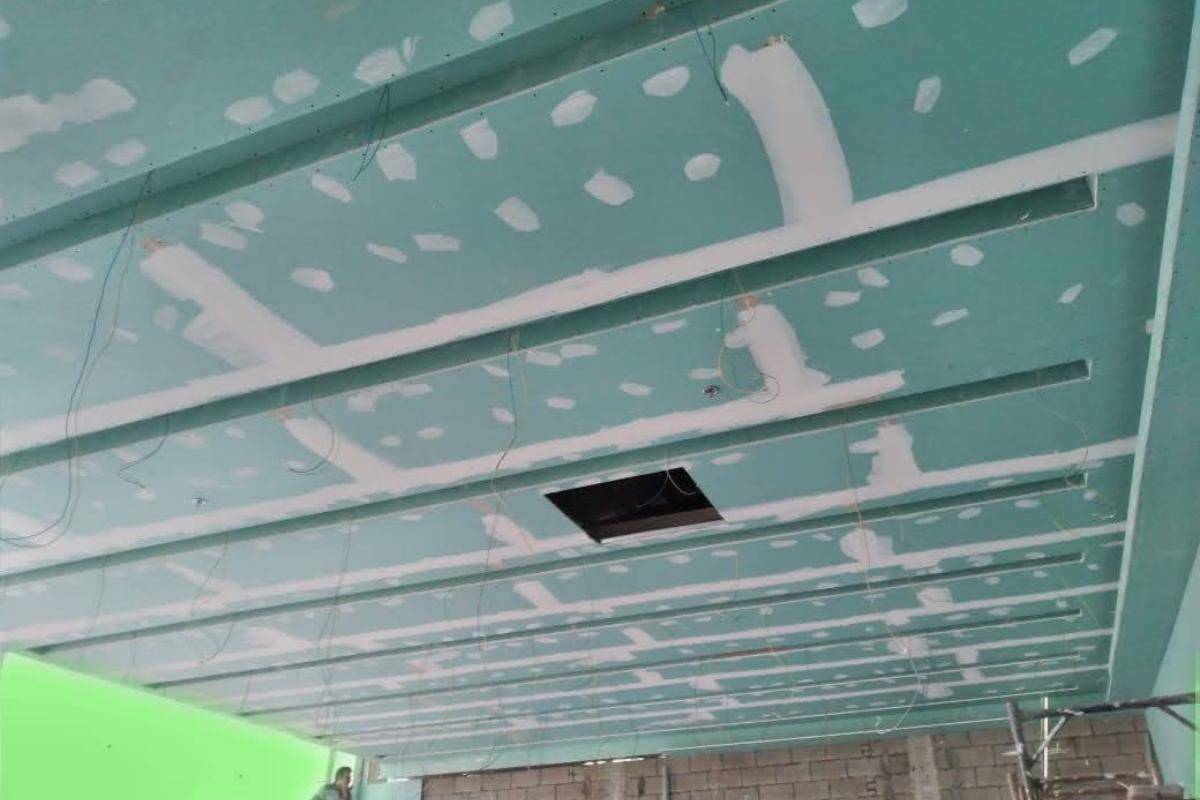
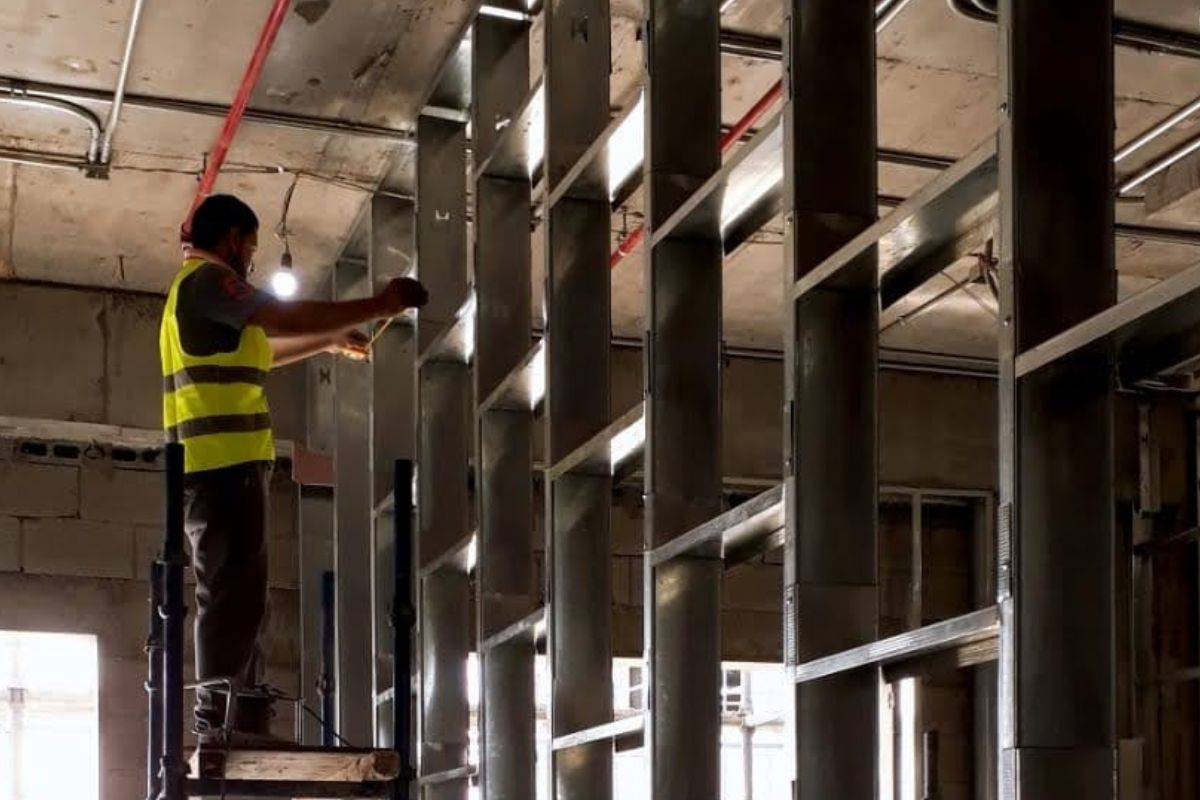
Tracks at floor and ceiling, vertical studs between them every 400–600 mm per manufacturer, boards on both faces in one or two layers, rock wool in the cavity where insulation is needed, then jointing. On a private hospital project we built partitions with tall studs along the corridors, and aligning them from the scaffold was the basis of everything that followed.
Sound insulation
The rule: sound passes through gaps before it passes through the wall. So:
- Two layers per face with staggered joints.
- Rock wool filling the cavity.
- The partition runs up to the slab, not just to the suspended ceiling.
- Acoustic sealant around the perimeter, and back-to-back electrical boxes treated.
Read acoustics for meeting rooms.
Loads
Decide before boarding what will hang: a TV, cabinets, basins or shelves. We put backing inside the partition at those points. Read hanging heavy items on drywall.
When we recommend blockwork
Walls exposed to direct water, warehouses with constant impact, exterior walls, or where the code requires it.
The service: drywall partitions and acoustics. For fire-rated walls: fire-rated gypsum.
Frequently asked questions
Can you hear through a drywall partition?
One layer and an empty cavity carries sound. Two layers per face, rock wool and sealed joints insulate better than many poorly rendered block walls.
Can a TV or cabinet hang on drywall?
Yes, with timber or steel backing inside the partition at that spot, or with fixings rated for medium loads.